Tokyo hatsumode map 2027: 13 shrines and temples for the New Year visit, crowds and New Year's Eve
Where to make your first shrine or temple visit of the year (hatsumode) in Tokyo, on one map: how crowded each place gets, where you can go on New Year's Eve night, and where the year-end bell rings.
Next hatsumode season: from Jan 1, 2027 (about 6 weeks away).
You don't have to go to a famous place. Japan has tens of thousands of shrines and temples, and many people simply make their New Year visit to the one in their own neighborhood. A small local shrine near your hotel is a perfectly good hatsumode, and much quieter.
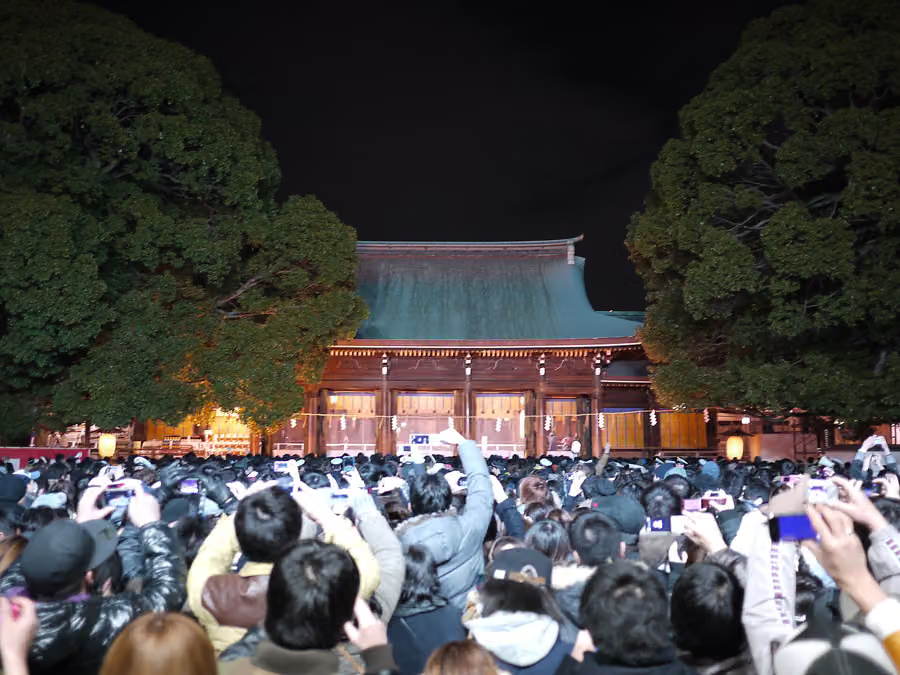
Japan's busiest New Year shrine, with around three million visitors over the first three days. In a usual year the gates open at midnight on Jan 1 and stay open through the night. It is most crowded from midnight to 3 a.m. and around midday on Jan 1, with entry controls on the approach. No cars in the grounds Jan 1–3.
- 👥 Crowds
- Extremely crowded (among Japan's busiest)
🌙 Open from midnight on Jan 1 in a usual year
Official site ↗📍 Directions in Google Maps ↗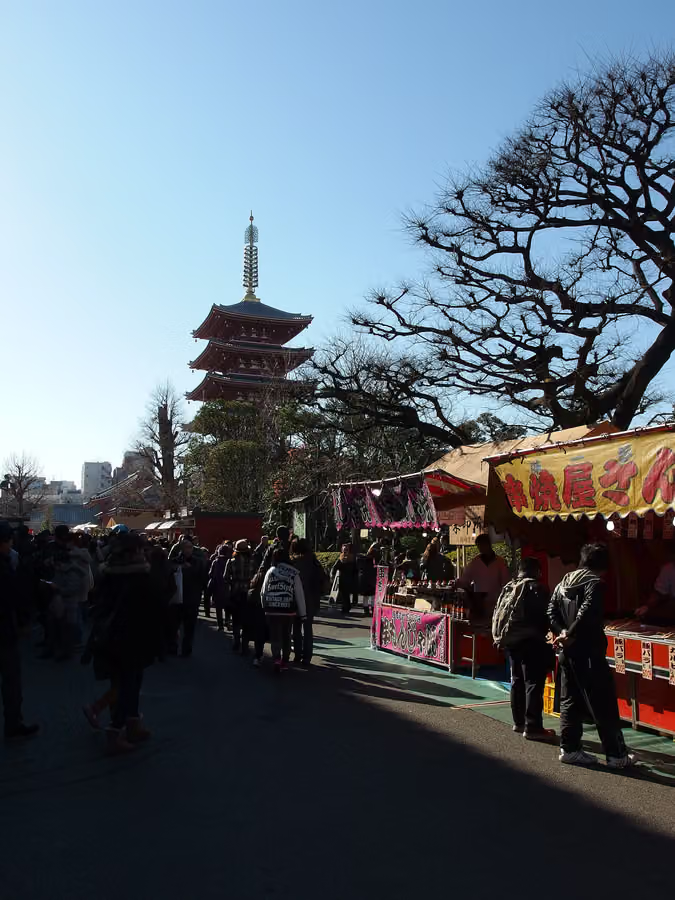
At midnight on New Year's Eve the temple bell rings (struck by members, not the public) and the New Year visits begin. Nakamise and the main hall fill up, with food stalls all around. New Year prayers run Jan 1–7. It is quieter early in the morning, in the evening and on weekdays from Jan 4.
- 👥 Crowds
- Extremely crowded (among Japan's busiest)
🌙 Open from midnight on Jan 1 in a usual year
🔔 Year-end bell (struck by members; you can listen)
Official site ↗📍 Directions in Google Maps ↗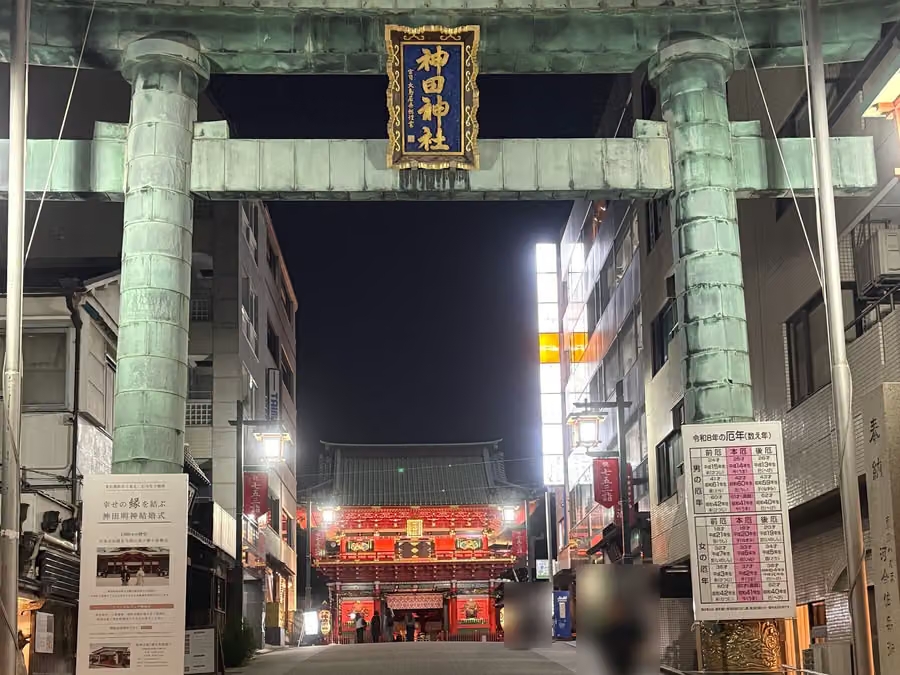
The shrine of business success, a walk from Akihabara. The gate opens at midnight on Jan 1 for the first ceremony of the year, and you can queue in front of it before then. About 300,000 people visit over the New Year. In the first working days of January, lines of office workers in suits come to pray.
- 👥 Crowds
- Crowded
🌙 Open from midnight on Jan 1 in a usual year
Official site ↗📍 Directions in Google Maps ↗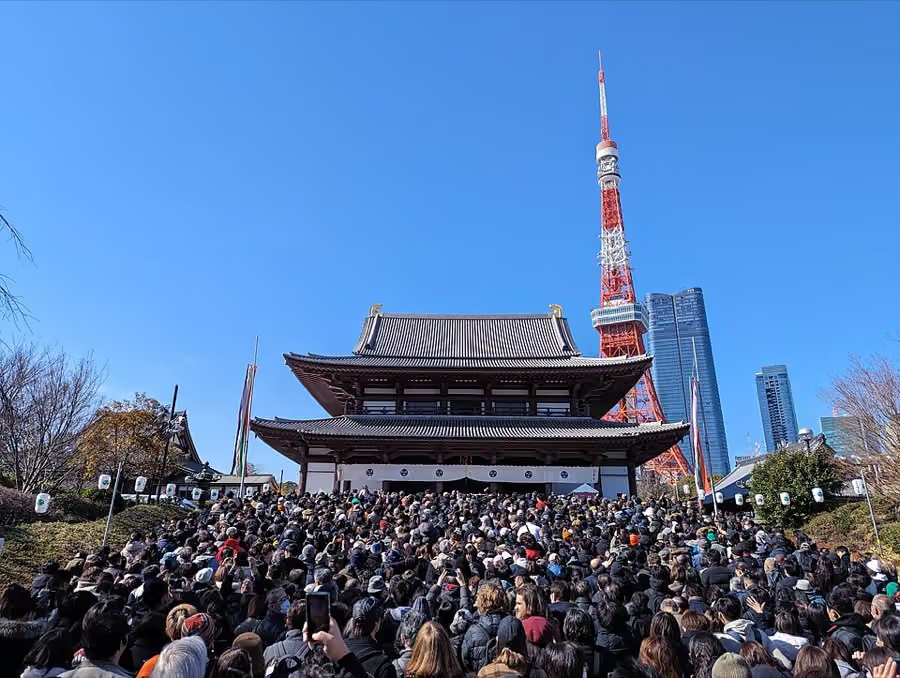
The temple right in front of Tokyo Tower. Its great bell, cast in 1673, is one of the largest in the Kanto region and rings in the New Year. Only people with a bell ticket can strike it; a small number are handed out in December in a usual year. Watching the countdown with Tokyo Tower lit up behind is a classic.
- 👥 Crowds
- Crowded
🔔 Year-end bell (bell ticket needed, few handed out)
Official site ↗📍 Directions in Google Maps ↗A temple with a striking Indian-style main hall, next to the Tsukiji Outer Market. On New Year's Eve it holds an evening gathering where visitors can strike the bell for free, first come first served within the time (some years needed a reservation by lottery, so check in December).
- 👥 Crowds
- Calmer
🔔 Year-end bell (free, first come first served in a usual year)
Official site ↗📍 Directions in Google Maps ↗Known as "Tokyo's Ise Shrine" and popular for love and good relationships. During the first three days, the line can take over an hour in the middle of the day (about 10 a.m. – 3 p.m.). A short walk from Iidabashi Station.
- 👥 Crowds
- Crowded
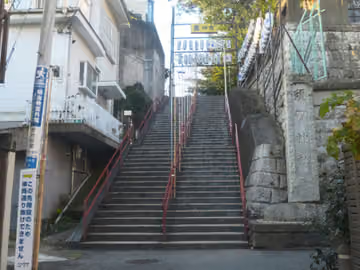
The guardian shrine of old Edo, in the government and business district, with an escalator up one of its approaches. In a usual year you can visit from midnight on Jan 1; it is busiest from about 10 a.m. to 3 p.m. on Jan 1–3.
- 👥 Crowds
- Crowded
🌙 Open from midnight on Jan 1 in a usual year
Official site ↗📍 Directions in Google Maps ↗The shrine of Sugawara no Michizane, god of learning, covered in wooden ema plaques wishing for exam success. About 250,000–300,000 people visit over the first three days. A walk from Ueno and Okachimachi.
- 👥 Crowds
- Crowded
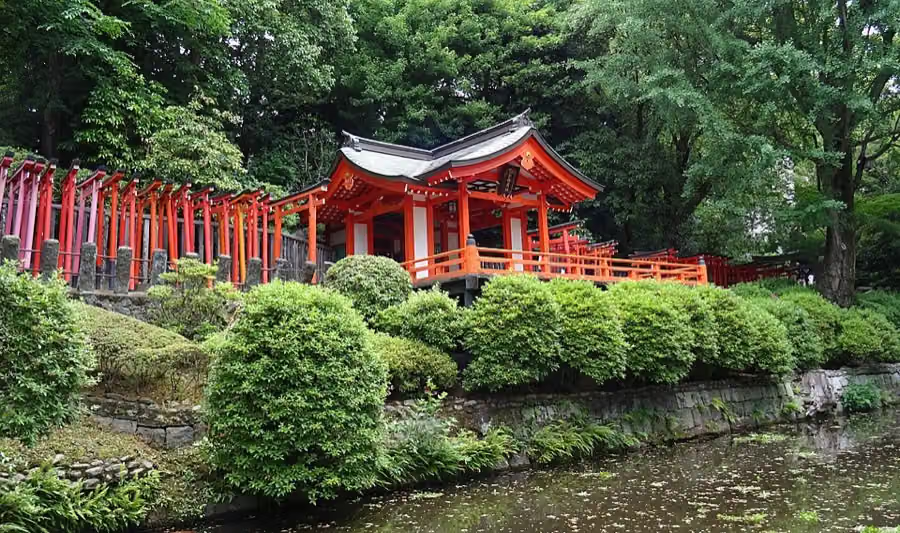
A shrine with buildings from the Edo period (Important Cultural Properties) and a tunnel of red torii gates. Calmer than the big central shrines, and easy to combine with a walk around Yanaka and Nezu.
- 👥 Crowds
- Calmer
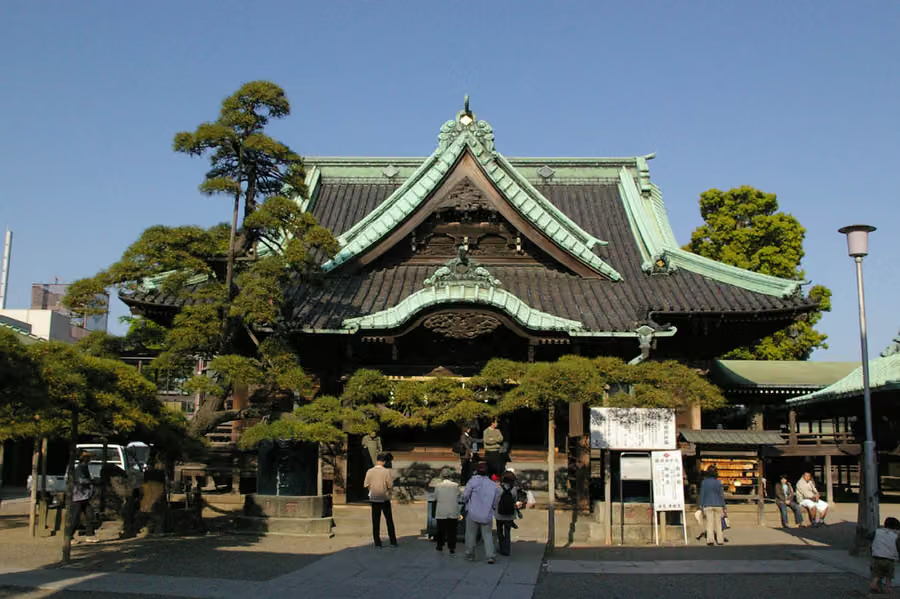
The setting of the film series "Tora-san" (Otoko wa Tsurai yo). The approach is lined with old shops selling kusa-dango (mugwort rice dumplings) to eat as you walk. About 200,000–250,000 people come over the New Year, and nearby roads are closed to cars Dec 31 – Jan 3. About 5 minutes on foot from Keisei Shibamata Station.
- 👥 Crowds
- Crowded
One of the three great temples of the Kanto region for warding off bad luck, and one of northern Tokyo's busiest New Year spots. The Tobu Daishi Line runs extra trains Jan 1–3.
- 👥 Crowds
- Crowded
One of the three great Fudo temples of the Kanto region, with a five-story pagoda. Big fire rituals for the New Year are held Jan 1–3, and a daruma market fills the grounds on Jan 28 (Hatsu-Fudo). Next to Takahatafudo Station on the Keio Line.
- 👥 Crowds
- Crowded
Just across the river from Tokyo in Kanagawa, a temple for warding off bad luck that draws about three million visitors over the first three days, on a par with Meiji Jingu. It is busiest from late on New Year's Eve into the early hours of Jan 1. A walk from Kawasakidaishi Station on the Keikyu Daishi Line, which runs extra trains for the New Year.
- 👥 Crowds
- Extremely crowded (among Japan's busiest)
🌙 Open from midnight on Jan 1 in a usual year
Official site ↗📍 Directions in Google Maps ↗Tap the map to move it
🚃 Trains on New Year's Eve
- All-night trains change every year. For 2025→2026, JR East ran trains through the night on six lines around Tokyo, including the Yamanote Line, but Tokyo Metro and Toei Subway did not.
- Train companies announce their plans for 2026→2027 in December. Check before you go, and plan how to get back.
⛩️ How to visit
- Bow once at the torii gate and walk to the side of the approach (the middle is for the gods).
- Rinse your hands and mouth at the water basin: left hand, right hand, then mouth.
- At a shrine: bow twice, clap twice, bow once. At a temple: don't clap; just put your hands together quietly.
- Draw an omikuji fortune or buy an omamori charm for the new year.
Crowd levels and hours are based on usual years, not a live report. Each place announces this year's times in December; check the official sites before you go.
Frequently asked questions
What is hatsumode?
Hatsumode (初詣) means "first visit": the first visit of the year to a shrine or temple, to give thanks for the past year and pray for health and good luck in the new one. Most people go during the first three days of January (sanganichi).
How do I pray at hatsumode?
Toss a coin into the offering box (5 yen is popular, because go-en sounds like "good connections" in Japanese). At a shrine, bow twice, clap twice, make your wish, then bow once more. At a temple, don't clap: put your hands together quietly and bow.
What do people do at hatsumode besides praying?
Many people draw an omikuji fortune for the year, buy an omamori charm or a hamaya arrow for good luck, and return last year's charms to the shrine or temple. At New Year, big shrines and temples often have food stalls along the approach.
Do I need to wear a kimono for hatsumode?
No. Most people go in everyday winter clothes. Some wear a kimono for the occasion, and if you'd like to, kimono rental shops in areas such as Asakusa can dress you. Check their New Year opening days and book early.
Where is the most popular place for hatsumode in Tokyo?
Meiji Jingu, with around three million visitors over the first three days. Senso-ji in Asakusa is also extremely busy, and Kawasaki Daishi, just outside Tokyo, draws a similar crowd.
Can I visit a shrine on New Year's Eve night?
Yes, at some. In a usual year Meiji Jingu, Kanda Myojin and Hie Shrine open from midnight on Jan 1, and Senso-ji's visits begin when the bell rings at midnight. Check this year's times in December.
Where can I ring the year-end bell (joya no kane)?
At Tsukiji Hongwanji anyone can strike it for free in a usual year, first come first served. Zojoji needs a bell ticket (only a few). At Senso-ji the bell is struck by members, but you can listen.
When is it less crowded?
Early morning, evening and from Jan 4. Smaller shrines such as Nezu Shrine are calmer than the big central ones.
Do I have to go to a famous shrine?
No. Japan has a huge number of shrines and temples, and many people visit the one in their own neighborhood. A small local shrine is a fine hatsumode and much less crowded.