Tokyo Over New Year: Christmas to Shogatsu, Hatsumode, Countdown, Lucky Bags, Closures and Trains
Published: 2026-10-12
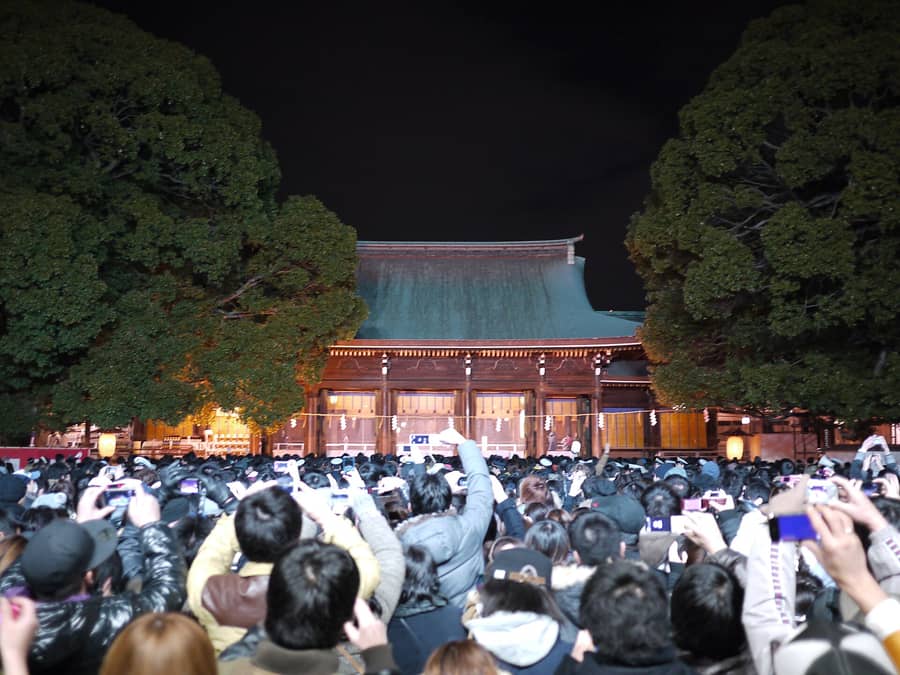
In Japan, the biggest holiday isn't Christmas but New Year (Shogatsu). If you're in Tokyo over the holidays, here's where to go for hatsumode, how Japanese people ring in the year, lucky bags, and which shops and trains run when.
The short answer
| When | What Tokyo is like |
|---|---|
| Until December 25 | Illuminations everywhere. But Christmas isn't a public holiday; it's a normal weekday |
| Around December 29 to 31 | Cleaning and homecoming season. Offices close and the city slowly goes quiet |
| December 31 (Omisoka) | People eat toshikoshi soba and temples ring the joya no kane bells. Some head out for a midnight shrine visit |
| January 1 (New Year's Day) | The quietest day of the year. Lots of shops are closed |
| January 1 to 3 (sanganichi) | Shrines and temples are packed for hatsumode. Department stores open their lucky bag sales |
Hotels fill up over New Year. If you're traveling then, book your stay early.
What is Japanese New Year?
For Japanese people, New Year is the most important holiday of the year: a time to welcome the new year's gods with family. Much like Christmas in the West, many people go back to their hometowns to be with family.
- Kadomatsu and shimekazari: decorations at the entrances of homes and shops that welcome the new year's gods.
- Osechi: New Year dishes, each with a lucky meaning.
- Ozoni: a soup with mochi rice cakes. The flavor varies by region and family.
- Otoshidama: pocket money adults give children at New Year.
- Toshikoshi soba: soba noodles eaten on New Year's Eve, a wish for a long life.
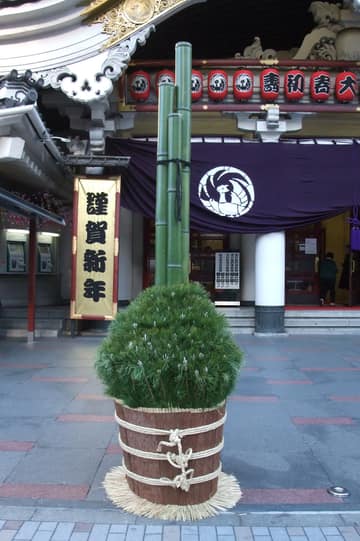 KadomatsuNew Year decorations of bamboo and pine, seen even at Tokyo landmarks such as the Kabukiza theater.
Christmas in Tokyo
In Japan, Christmas is more a seasonal event than a religious one.
- Illuminations: from around November, the street trees of Marunouchi, Roppongi, Omotesando and more are lit up.
- Christmas cake: strawberry shortcake with whipped cream is the classic. Many people pre-order one from a bakery or convenience store.
- Fried chicken: eating fried chicken at Christmas is a Japanese custom, and lines can form at chicken shops.
- December 25 is a weekday: shops and trains run as normal. On the 26th, the decorations switch to New Year almost overnight.
Where to go for hatsumode
Hatsumode is the first visit of the year to a shrine or temple. Here are Tokyo's most popular spots.
Meiji Jingu (Harajuku)
Said to draw more visitors over the first three days of the year than any other shrine in Japan: around 3 million every year.
- Usually open all night from New Year's Eve into New Year's morning (it can vary by year).
- Midday on January 1 is the busiest. Crowd control on the approach means reaching the main hall can take a long time.
- For a calmer visit, go in the morning from January 3 onward.
Senso-ji (Asakusa)
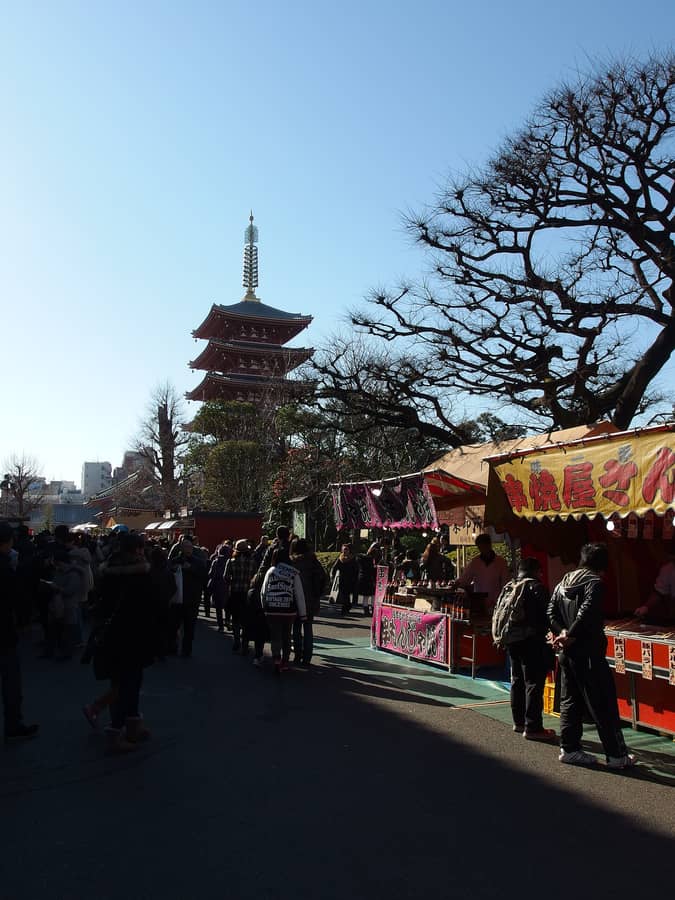
From Nakamise-dori to the main hall, it's packed with worshippers, and food stalls give it a festival feel.
Kanda Myojin (Akihabara and Ochanomizu)
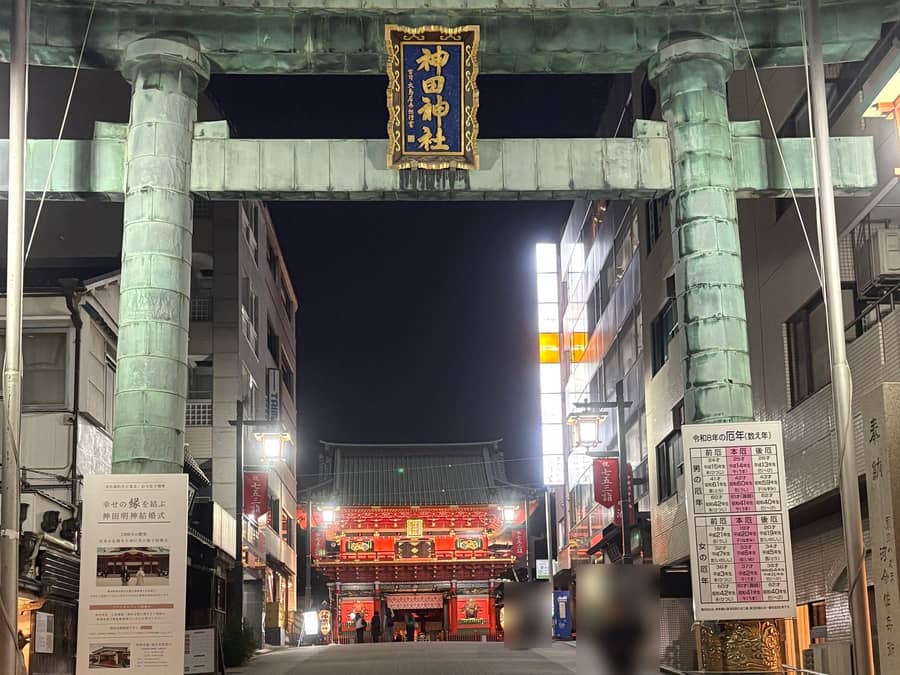
Known for blessings on business. On the first working day of the year, groups of office workers in suits come to pray. Walkable from Akihabara.
Zojoji (Shibakoen)
A temple right in front of Tokyo Tower. On New Year's Eve its bell rings out the year, with the illuminated Tokyo Tower behind it.
For nearby sights, see our Harajuku, Asakusa, Akihabara and Tokyo Tower pages.
How to pray at hatsumode
- Bow once before the torii gate, and avoid walking down the very center of the path (it's said to be for the gods).
- At the temizuya water basin, use the ladle to rinse your left hand, right hand, then mouth.
- Toss in a coin and, at a shrine, do "two bows, two claps, one bow".
- Don't clap at a temple. Just put your hands together quietly.
- Try your luck with an omikuji fortune, or buy an omamori charm.
At popular spots over the first three days, even the water basins and offering boxes get crowded. Move with the flow of the line.
How Japan rings in the new year
- Joya no kane: on New Year's Eve, temples ring their bells 108 times, said to be the number of human desires.
- The classic Japanese New Year's Eve is at home, eating toshikoshi soba and watching TV shows such as the Kohaku song contest.
- Shibuya countdown: crowds used to gather at the Scramble Crossing, but no countdown event has been held in recent years. For the 2025-26 New Year, drinking on the streets around Shibuya Station was banned from New Year's Eve evening to New Year's morning.
Nightlife areas can get very crowded on New Year's Eve. Take care in crowds and follow local guidance.
Hatsuhinode: the first sunrise
Watching the first sunrise of the year on New Year's morning is called hatsuhinode. In Tokyo the sun rises at around 6:50am. High buildings and the waterfront are popular, and places such as Tokyo Skytree usually hold special first-sunrise openings (advance application required).
Lucky bags and New Year sales
- Fukubukuro (lucky bags): sealed bags holding more goods than you'd normally get for the price, sold only at New Year. Clothes, cosmetics, snacks, electronics and more.
- Hatsuuri (first sales): many department stores open on January 2, with lines before opening. Some shopping malls open on January 1.
- Popular lucky bags are increasingly sold through online pre-orders or lotteries.
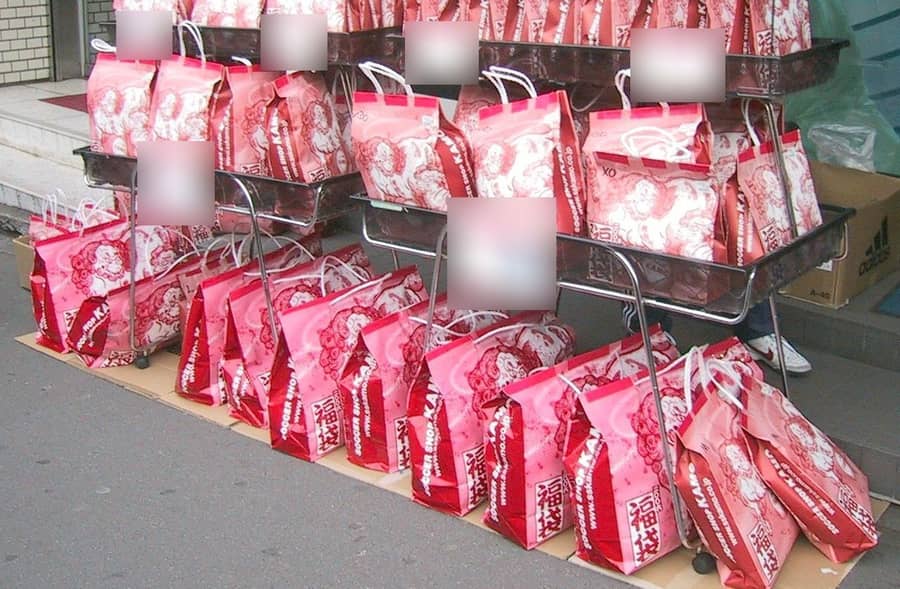
Rows of bags marked with the character for "luck". Lining up outside a shop is a New Year tradition.
What's open and closed over New Year
📢 On January 1, a great many shops are closed
| Type | Over New Year |
|---|---|
| Convenience stores | Open as usual. Your best friend in a pinch |
| Gyudon and fast-food chains | Many are open |
| Don Quijote | Many are open |
| Department stores | Closed January 1; many open January 2 with first sales |
| Independent restaurants and small shops | Many close from New Year's Eve to January 3 |
| Bank counters | Closed December 31 to January 3. Convenience store ATMs work |
| Museums | Many close from late December to around New Year's Day |
| Government offices | Closed December 29 to January 3 |
Opening days vary by shop. Check the official site or Google Maps for holiday hours before you go.
- Need cash? Convenience store ATMs, such as at 7-Eleven, are the easy option. See our 7-Eleven page.
Trains over New Year
- Over the holidays, many lines run on a weekend and holiday timetable.
- All-night trains on New Year's Eve depend on the company and the year. For 2025-26, JR East ran all night on six Tokyo-area lines including the Yamanote Line, but Tokyo Metro and Toei Subway did not.
- Each company announces its 2026-27 schedule around December. Always check before you head out.
For the basics, see "How to ride trains in Tokyo".
Other January events
- New Year Greeting at the Imperial Palace: usually on January 2, the Emperor greets the public at the Imperial Palace. Anyone can attend (check the Imperial Household Agency's announcement).
- First working day: January 4 (Monday) in 2027. Long lines of office workers form at Kanda Myojin.
- Coming of Age Day: January 11 (Monday) in 2027. You may see young adults in furisode kimono around town.
Frequently asked questions
Where should I go for hatsumode in Tokyo?
Popular choices are Meiji Jingu, said to draw the most visitors in Japan over the first three days; Senso-ji, with its food stalls; and Kanda Myojin, near Akihabara. To avoid crowds, go in the morning from January 3 onward.
Is anything open in Tokyo on January 1?
Convenience stores, chains such as gyudon restaurants, and Don Quijote are usually open. Many department stores and independent shops close, so check opening days in advance.
Is there a New Year's Eve countdown in Tokyo?
No countdown event has been held at Shibuya's Scramble Crossing in recent years. Listening to temple bells or making a shrine visit is the more Japanese way to see in the new year.
Do trains run all night on New Year's Eve in Tokyo?
It varies by year. For 2025-26, some JR East lines ran all night, but Tokyo Metro and Toei Subway did not. Check each company's announcement for the latest.
When and where can I buy lucky bags?
Many department stores sell them from their first sale on January 2, and some shopping malls from January 1. Popular bags may be sold by online pre-order or lottery.
Is Christmas a public holiday in Japan?
No. December 25 is a normal weekday, and shops and trains run as usual.
Official websites
- Meiji Jingu
- Senso-ji
- Kanda Myojin (Japanese)
- Zojoji (Japanese)
- Imperial Household Agency (New Year Greeting)
Hours, prices and rules can change. Check the official websites for the latest before you go.
Read next
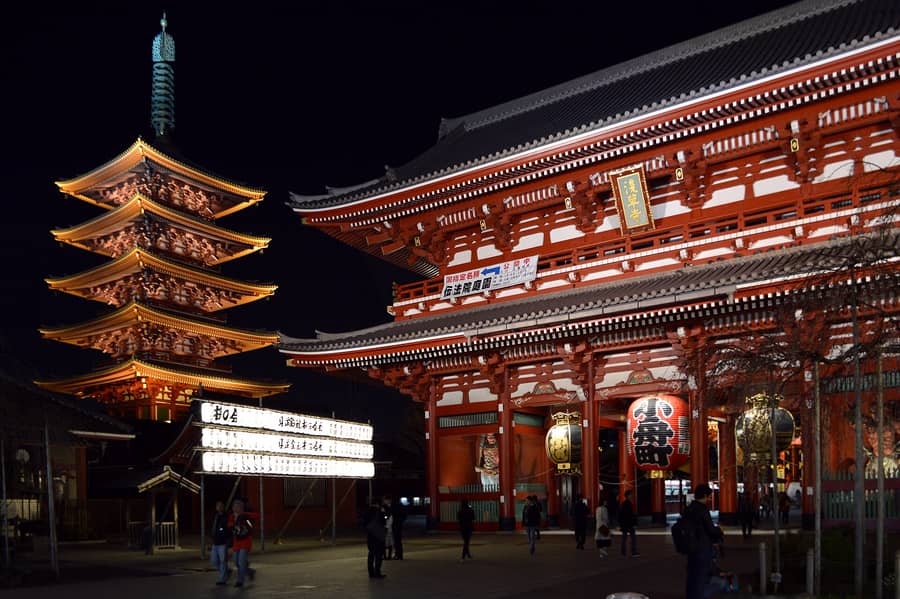 15 Most Instagrammable Spots in Tokyo: Night Views, Traditional Japan and ArtThese are the photogenic Tokyo places shared all over the world on social media. We've added the best times to shoot and the etiquette for taking photos without trouble.2026-10-08
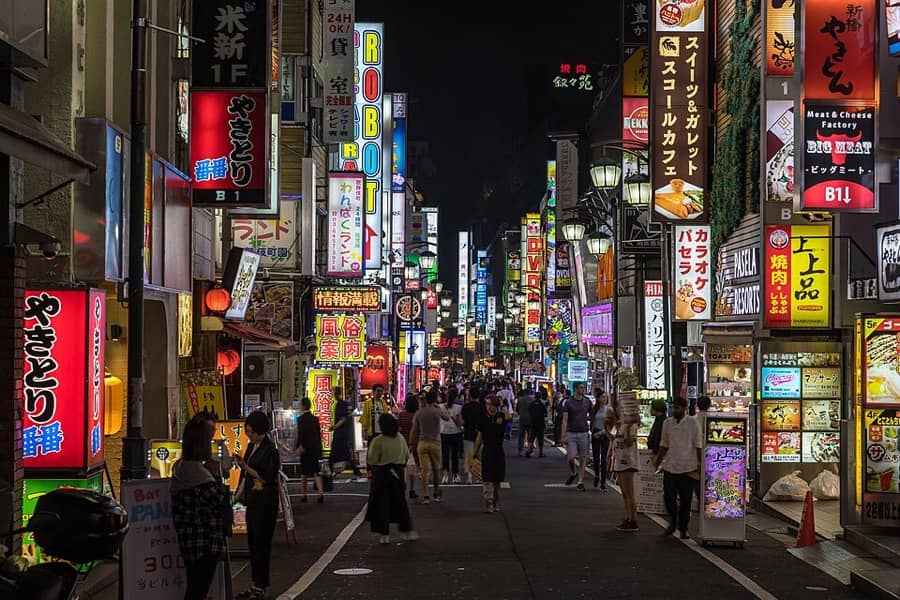 Shibuya, Shinjuku, Asakusa… Tokyo's Top Areas Compared: Where to Go FirstTokyo isn't one city center but a cluster of very different neighborhoods. Here's what each popular area feels like, and which ones pair well in a day.2026-10-06
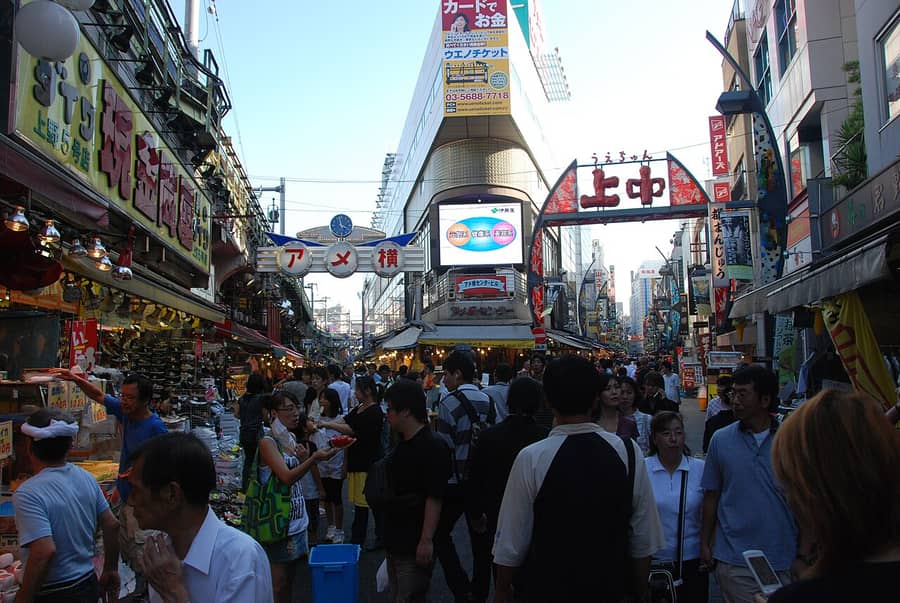 Tokyo Street Food Guide: Tsukiji, Ameyoko, Asakusa, Yanaka and MoreGrazing your way through little stalls and shops, a bite here and a bite there, is one of the joys of Tokyo. Here are the best food streets, plus the etiquette to know.2026-10-06