How to Ride Trains in Tokyo: Suica, Tap-to-Pay, Transfers and Rush-Hour Etiquette
Published: 2026-10-05 · Last verified: 2026-10-04
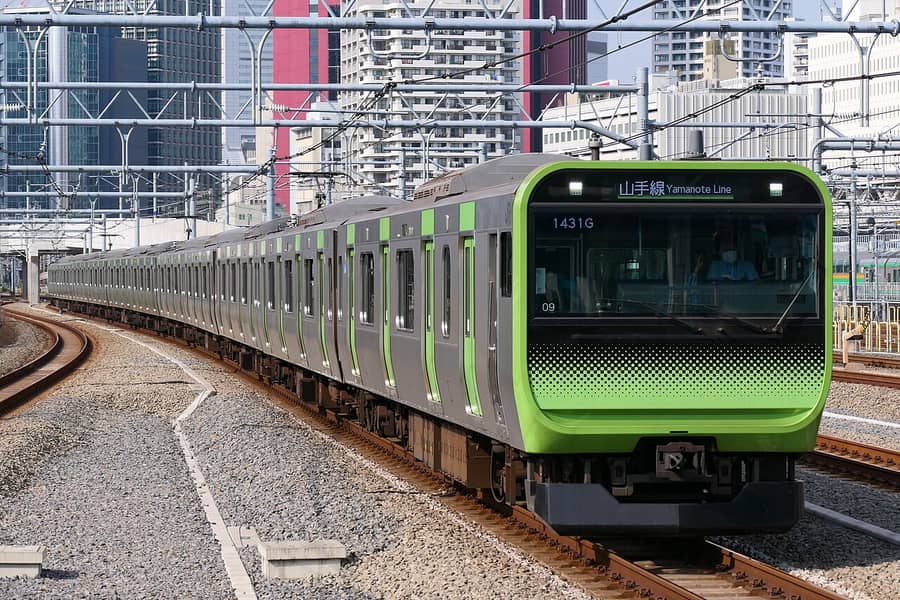
Tokyo's rail map looks overwhelming, but it's easy once you know the basics. Here's how to pay, transfer, dodge the crowds and fit in on board.
The short answer
- One IC card (like Suica) gets you onto almost every JR, subway and private line: just tap. It also works at convenience stores and vending machines.
- On iPhone, the visitor app Welcome Suica Mobile or Apple Wallet turns your phone into an IC card.
- If you'll ride the subway a lot, the Tokyo Subway Ticket, an unlimited pass for foreign visitors, is handy.
- For directions, a route app such as Google Maps is the easiest way.
How to pay: your options
| Option | Who can use it | Good to know |
|---|---|---|
| Welcome Suica Mobile | iPhone | A Suica app for visitors. No deposit, and you can set it up before you land |
| Suica or PASMO in Apple Wallet | iPhone | Top up with a card in Apple Pay (some cards aren't accepted) |
| Welcome Suica (card) | Everyone | A visitor card sold at airports and major stations. Valid for a limited period |
| Contactless credit card | Holders of tap-to-pay cards | Tap at the gates on the subway (Tokyo Metro and Toei) and some private lines |
| Tokyo Subway Ticket | Visitors on a foreign passport with short-term stay | Unlimited rides on Tokyo Metro and Toei subways, in versions for different numbers of days |
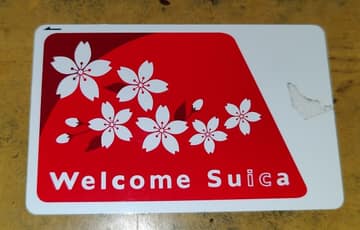 Welcome SuicaThe visitor version of Suica, with a pretty cherry blossom design.
 JR Yamanote LineThe loop line around central Tokyo, linking Shibuya, Shinjuku, Tokyo Station, Ueno and more.
Tokyo Subway Ticket (for foreign visitors)
Unlimited rides on Tokyo Metro and Toei subways, in versions for different numbers of days.
Most Android phones bought outside Japan can't run the Suica app. Android users should get the Welcome Suica card.
Tap-to-pay only works at stations with compatible gates, and some lines don't have them. The one thing that works everywhere is an IC card.
Where can you get an IC card now?
- Regular Suica and PASMO cards: sales were paused because of a chip shortage, but station ticket machines have sold them again since March 2025. You pay a refundable deposit.
- Welcome Suica: sold at dedicated machines in the Narita and Haneda airport stations and at JR East Travel Service Centers in major stations such as Tokyo, Shibuya, Shinjuku, Ikebukuro and Ueno.
- TOURIST PASMO: a visitor PASMO launched in May 2026, sold at stations such as those at Narita and Haneda airports. No deposit, but no refunds, and it's valid for a limited period.
On iPhone, your phone beats a card. With Suica or PASMO in Apple Wallet, or Welcome Suica Mobile, there's no queue at the counter or machine, and you can check your balance and top up on your phone. If you have an Android phone bought outside Japan, get a card.
Riding, step by step
- Search your destination in a route app and note the line name and your boarding and exit stations.
- Tap your IC card or phone on the reader at the ticket gate.
- Follow the signs by line color and letter. Subway stations have codes such as "G09", which makes them easy to find.
- Line up at the markings on the platform floor, and let people off before you board.
- When you get off, check the exit number on the yellow signs. Big stations have many exits, so pick the one closest to where you're going.
JR, Tokyo Metro, Toei and the private railways are separate companies. Transfers sometimes take you out through the gates or through a transfer gate, but with an IC card you just tap and the fare is worked out for you.
Watch out for rush hour
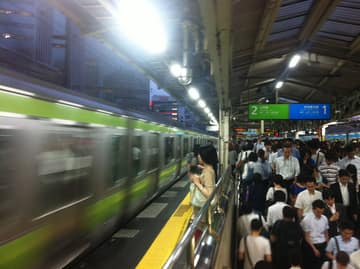 Morning and evening rushOn weekday mornings and evenings, platforms and trains get packed.
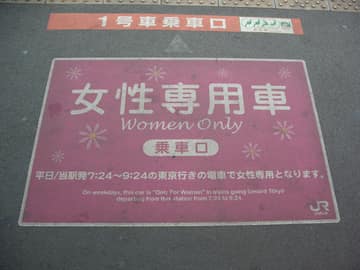 Women-only carsSome lines have women-only cars at set times, such as weekday mornings.
- The worst times are weekday mornings from about 7:30 to 9:00 and the evening rush home. Avoid riding with a big suitcase at these times if you can.
- Women-only cars are also open to children of elementary school age and younger, and to people with disabilities and their caregivers. The hours and cars vary by line, so check the signs on the platform.
- Use the overhead racks for backpacks and smaller bags, and don't forget them when you get off. Keep suitcases at your feet, clear of the doors and aisle.
- On Tokyo escalators most people stand on the left, but more and more stations ask everyone to stand still rather than walk.
On the Tokaido, Sanyo and Kyushu Shinkansen, bringing a large suitcase (total of length, width and height over 160 cm) requires a reservation for a "seat with an oversized baggage area". Without one you'll pay a fee. Bags over 250 cm in total aren't allowed.
Women-only cars are marked with pink signs on the platform floor and on the train. Men should avoid them during the marked hours.
Etiquette on board
Don't take phone calls on the train, and keep your phone on silent.
- When it's crowded, wear your backpack on your front or put it on the overhead rack.
- Priority seats are for older people, people with disabilities, pregnant people and those with small children.
- Hardly anyone eats on commuter trains. On the Shinkansen and limited express trains, eating is fine.
- Trains stop running late at night and don't run all night. On a late evening, check the time of the last train.
For getting in from the airport, see Narita and Haneda to central Tokyo. The main lines are on our transport page, and route apps are in our recommended apps.
Official websites
Hours, prices and rules can change. Check the official websites for the latest before you go.
Read next
 Staying Online in Tokyo: eSIM vs SIM Card vs Pocket Wi-FiMaps, train routes, translation: you'll want mobile data from the moment you land. Here's how to choose, with a focus on the easiest option, eSIM, plus step-by-step setup.2026-10-05
 Narita and Haneda to Central Tokyo: Which Train or Bus to TakeThe easiest way from each airport to Shinjuku, Shibuya, Asakusa, Ueno, Ginza and Tokyo Station, plus tips on tickets and luggage.2026-10-04
 Convenience Store and Drugstore Must-Buys in TokyoWhat to eat at Japan's convenience stores, which drugstore items visitors take home, and how tax-free shopping works from November 2026.2026-10-03