Tokyo's Islands: Izu Oshima, Hachijojima and Ogasawara — Ferries, Travel Times, Food and Activities
Published: 2026-10-15
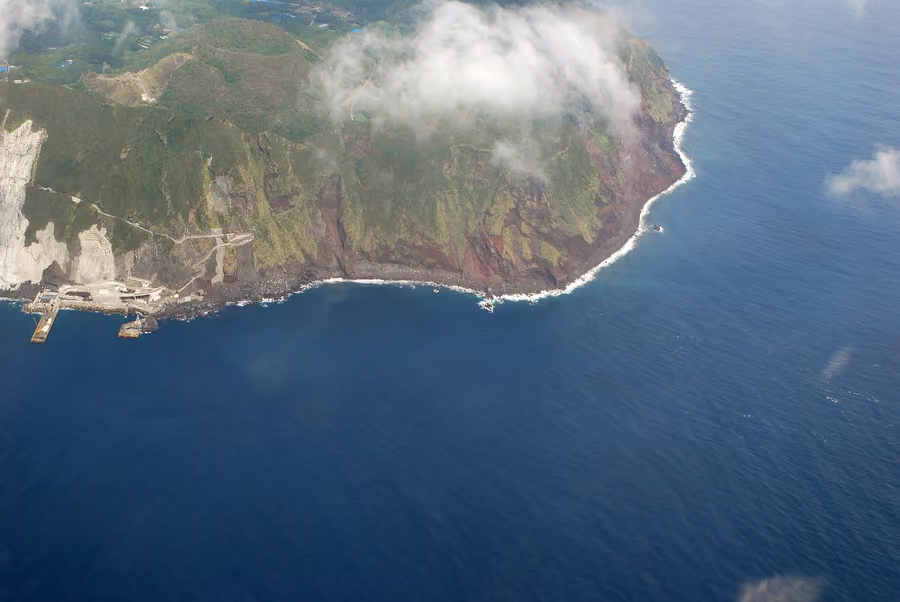
Tokyo isn't just skyscrapers. Volcanic deserts, white-sand beaches, wild dolphins and star-filled skies are all part of Tokyo too — on its islands. Here's what each main island offers and how to get there by ferry or plane.
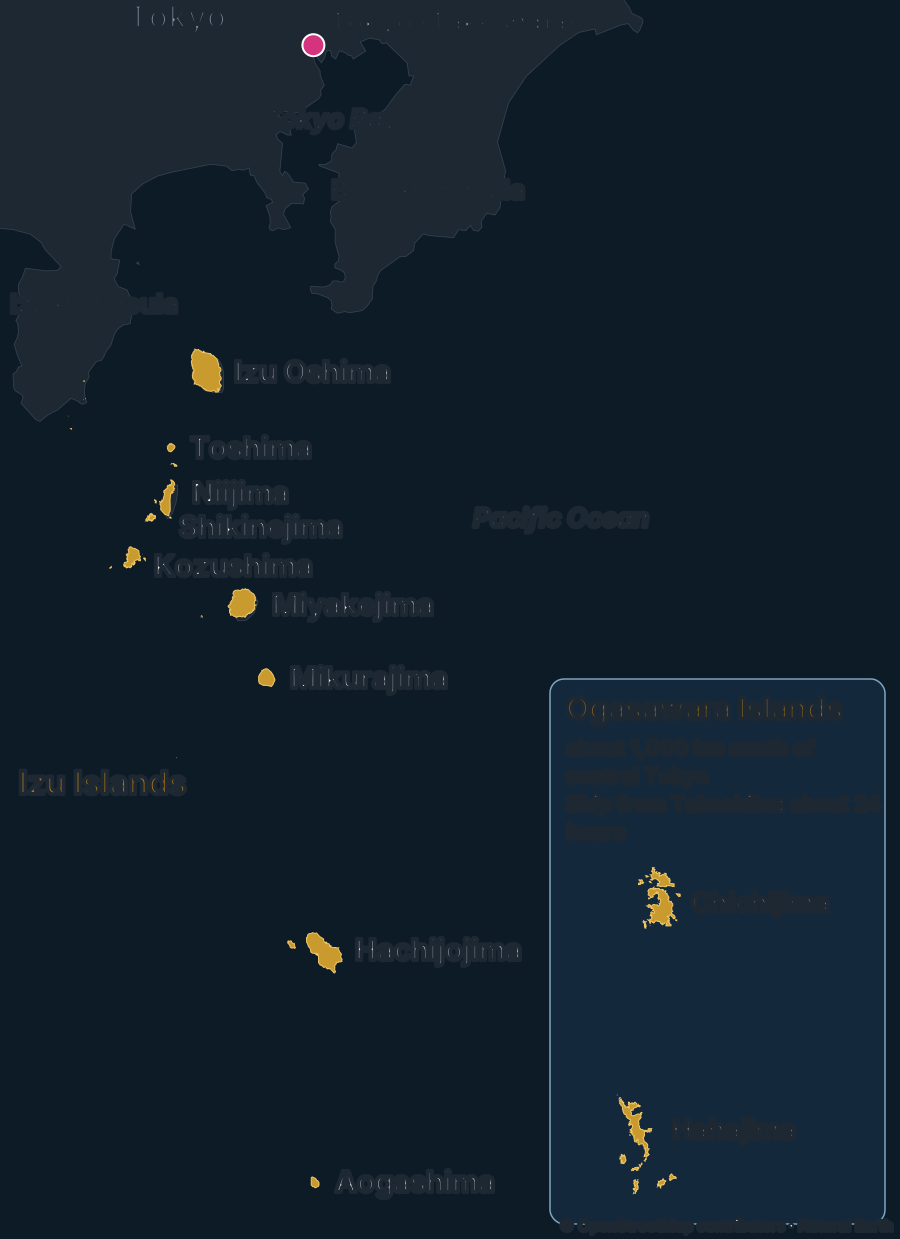
The short answer
| Island | How to get there, and how long | Highlights |
|---|---|---|
| Izu Oshima | Jet ferry about 1h45m / overnight ferry / plane from Chofu | Mt. Mihara and its desert, camellias, cycling |
| Niijima & Shikinejima | Jet ferry about 2h20m | White beaches and surfing, free seaside hot springs |
| Kozushima | Jet ferry about 3h05m | Dark Sky Park stargazing, crystal-clear sea |
| Mikurajima | Overnight ferry about 7h25m | Swimming with wild dolphins |
| Hachijojima | Plane from Haneda about 55 min / overnight ferry about 10h20m | Hachijo-fuji, hot springs, island sushi, winter whales |
| Aogashima | Helicopter from Hachijojima about 20 min | A rare "double caldera" |
| Ogasawara (Chichijima) | Ogasawara Maru from Takeshiba, about 24 hours (no airport) | World Natural Heritage, whales, dolphins |
For a first trip, try Izu Oshima. By jet ferry you can even do it as a day trip, with volcanic scenery and great cycling.
Times are the fastest from Takeshiba, Tokyo, based on Tokai Kisen and the islands' official tourism information.
Islands, but still "Tokyo"
- The Izu Islands and the Ogasawara (Bonin) Islands in the Pacific south of Tokyo are all part of the Tokyo Metropolis. Ogasawara is about 1,000 km from central Tokyo.
- Cars on the islands carry "Shinagawa" license plates, the same as in central Tokyo — a fun detail to spot.
- Each island has its own dialect, food and festivals, a world away from the city.
How to take the ferry or plane
Your departure point: Takeshiba Passenger Terminal
Every ferry to the Izu and Ogasawara Islands leaves from Takeshiba Passenger Terminal (1-12-2 Kaigan, Minato City), a harbor on Tokyo Bay right next to central Tokyo.
- Takeshiba Station (Yurikamome line): about 1 minute on foot — the closest
- JR Hamamatsucho Station, North Exit: about 8 minutes on foot (Yamanote and Keihin-Tohoku lines)
- Daimon Station (subway): about 10 minutes on foot (Toei Asakusa and Oedo lines)
- From Haneda Airport, take the Tokyo Monorail to its last stop, Hamamatsucho, and walk from there.
- The terminal has a waiting room, coin lockers, shops, a restaurant, an ATM and free Wi-Fi.
- There's also "Tokyo Ai-land," a shop selling island specialties — a good first taste of the islands.
- You need to check in, so arrive at least 30 minutes before departure.
Choosing between ferry and plane
| Option | What it's like | Cost |
|---|---|---|
| Jet ferry | A fast hydrofoil that "flies" over the water. Reserved seats, quick trips to Oshima, Niijima and more | Pricier than the cheapest ferry class |
| Overnight ferry | Leaves Takeshiba at night and arrives in the morning. From shared tatami rooms ("2nd class") to private cabins | 2nd class is the most affordable way to go |
| Plane | Haneda to Hachijojima; Chofu Airfield to Oshima, Niijima, Kozushima and Miyakejima. The fastest | The most expensive, with few seats — book early |
- Book your ferry on the Tokai Kisen website (available in English).
- On the day, arrive at Takeshiba Passenger Terminal a little early and collect your ticket.
- Overnight ferries have a shop and vending machines, and some classes can rent blankets.
- On arrival, take your lodging's pickup or a local bus from the port.
Island ferries and flights are often cancelled because of wind and waves. Leave a spare day before your flight home, and check the service status before you go.
Jet ferries also run from Atami in Shizuoka to Izu Oshima (about 45 min) — easy to combine with Hakone or the Izu Peninsula.
Izu Oshima: volcano and camellia island
Home to the active volcano Mt. Mihara, the whole island is a geopark.
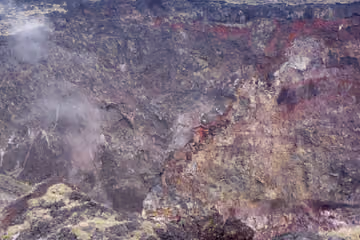 Mt. MiharaWalk around the summit crater through rugged lava fields that feel like another planet.
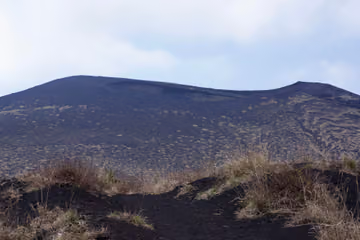 Ura-sabaku (the "back desert")A plain of black volcanic sand — the only place marked as a "desert" on Japan's official maps. (Photo: black sand slopes of Mt. Mihara.)
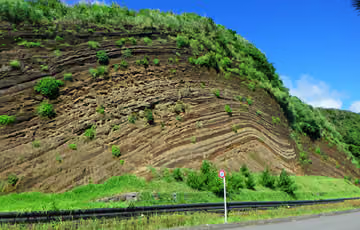 Giant strata cross-sectionStriped volcanic layers run for about 800 m along the road, nicknamed the "Baumkuchen."
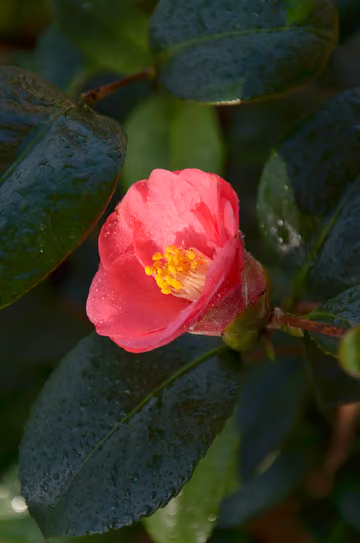 Camellia FestivalThe island is famous for camellias, celebrated each winter to spring at the Izu Oshima Camellia Festival.
Cycling around the island
- The loop road around the island is about 46 km, with few traffic lights and views of the sea and the volcano.
- It's hilly, so an e-bike is a great choice. You can rent bikes near the ports.
- Even a short ride along the coast is a treat.
Niijima, Shikinejima and Kozushima: sea, hot springs and stars
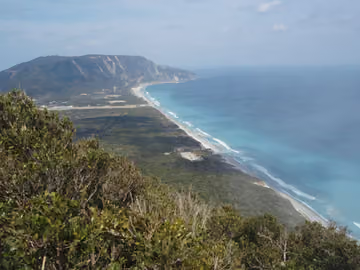 Habushiura Beach, NiijimaAbout 6.5 km of white sand, famous for surfing and surf contests.
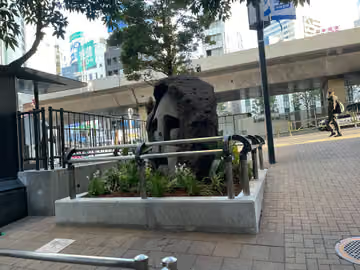 Moyai statues, NiijimaStatues carved from local "koga stone" stand all over the island. Koga stone is said to be found only on Niijima and Italy's Lipari. The one in the photo is the Moyai statue at Shibuya Station, a gift from Niijima in 1980.
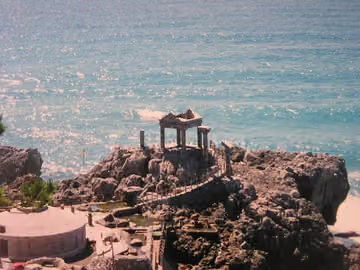 Yunohama Onsen, NiijimaA seaside open-air bath shaped like an ancient Greek temple. Free and open 24 hours (swimsuits on).
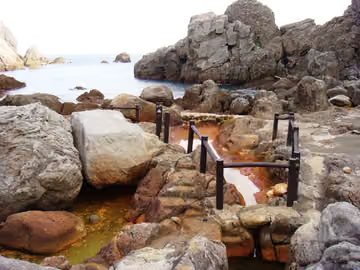 Jinata Onsen, ShikinejimaA natural hot spring in a rocky cleft, mixed with seawater; the temperature changes with the tide.
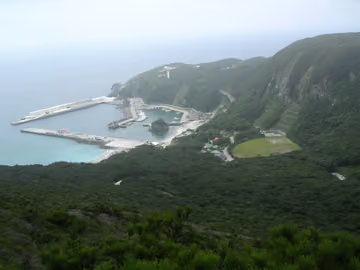 KozushimaIn 2020 the whole island became a Dark Sky Park, the second in Japan. Expect a sky full of stars.
Mikurajima: swim with wild dolphins
- Wild dolphins live around the island, and you can join guided dolphin swim tours, roughly from spring to autumn.
Mikurajima has very few places to stay, and you can't land without a lodging reservation. Start your planning by booking somewhere to stay.
Hachijojima: the tropical side of Tokyo
About 55 minutes by plane from Haneda, this warm island is lined with palm trees.
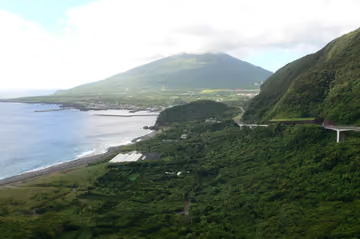 Hachijo-fujiThe island's symbol. The walk around its summit crater, "Ohachi-meguri," is a favorite.
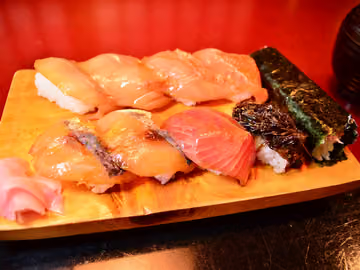 Shimazushi (island sushi)Fish marinated in soy sauce on slightly sweet rice, with Japanese mustard instead of wasabi.
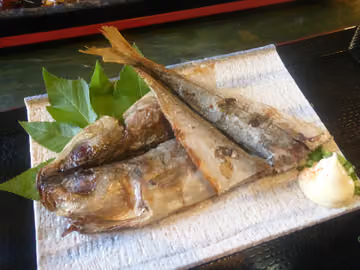 Ashitaba and kusayaAshitaba, a hardy green said to sprout again by "tomorrow," and kusaya, a famously pungent dried fish. (Photo: kusaya.)
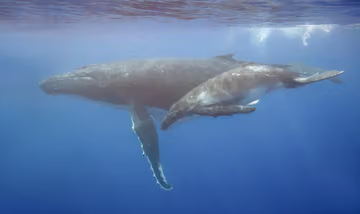 Winter whalesHumpback whales visit from winter to spring, and can sometimes be seen from land.
 Kihachijo silkA traditional silk woven in yellow, brown and black, prized since the Edo period. (Painting: "Kihachijo" by Takehisa Yumeji, 1931.)
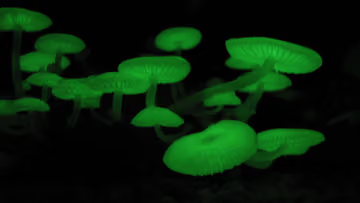 Glowing mushrooms"Yakoutake," mushrooms that glow green in the dark forest, on display year-round at the visitor center. (Photo taken at Hachijojima's botanical park.)
- The island has many seaside hot springs, easy to stop at on a drive.
Aogashima: a volcano inside a volcano
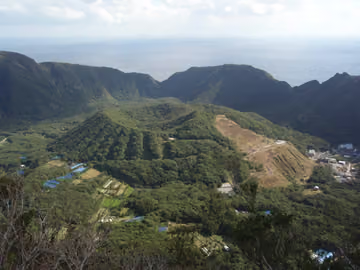 Double calderaA small volcano, Maruyama, sits inside a larger crater — a landscape rare anywhere in the world.
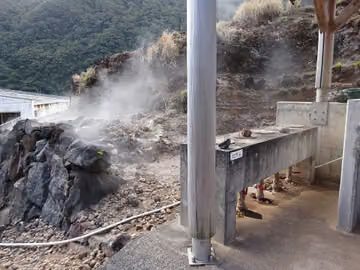 HingyaVolcanic steam rising from the ground. Use it to steam vegetables and eggs, or try the geothermal sauna.
The boat from Hachijojima to Aogashima is often cancelled in rough seas (it sails only about half to 60% of the time). The "Tokyo Ai-land Shuttle" helicopter seats nine and needs a reservation.
Ogasawara: 24 hours by sea to a Tokyo paradise
There's no airport — just a ship that takes about 24 hours from Takeshiba. People still keep coming back.
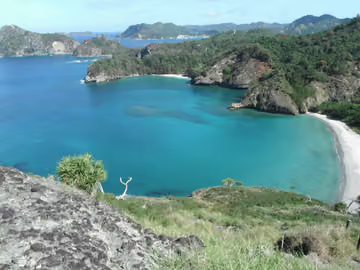 Chichijima"Bonin Blue" sea and white beaches. The islands became a World Natural Heritage site in 2011.
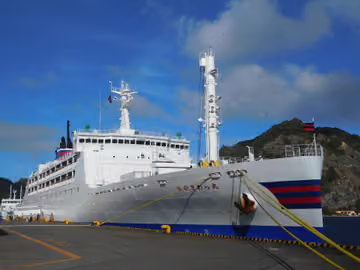 Ogasawara MaruThe ship links Takeshiba and Chichijima in about 24 hours. It usually sails about once every six days, so a trip takes around six days at the shortest.
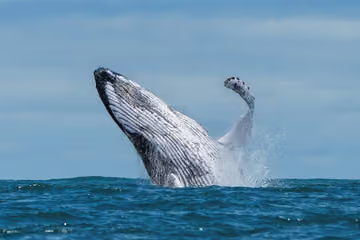 Whale watchingHumpback whales from winter to spring (best February to April), and a chance of dolphins all year.
- From Chichijima, the Hahajima Maru takes about 2 hours to quieter Hahajima.
More ways to enjoy the islands
| Activity | Best islands |
|---|---|
| Cycling | Izu Oshima |
| Surfing | Niijima |
| Seaside hot springs | Niijima, Shikinejima, Hachijojima |
| Stargazing | Kozushima |
| Swimming with dolphins | Mikurajima |
| Whale watching | Ogasawara, Hachijojima |
| Hiking | Izu Oshima (Mt. Mihara), Hachijojima (Hachijo-fuji) |
| Diving and snorkeling | All islands (especially Ogasawara and Hachijojima) |
Island travel tips
- Shops and lodgings are limited. Book your stay early, especially for the summer holidays.
- Some island shops take cash only, so bring a bit more cash than usual.
- Getting around is by bus, rental car or rental bike. Buses are infrequent.
- Ferries may not sail in bad weather. Leave room in your schedule.
Official websites
- Tokai Kisen (ferries to the Izu Islands)
- Ogasawara Kaiun (Ogasawara Maru, Japanese)
- Island ferry and flight status (Tokyo)
- Izu Oshima Navi (Oshima Tourism Association, Japanese)
- Niijima Tourist Information (Japanese)
- Kozushima stargazing (Japanese)
- Mikurajima Tourism Association (Japanese)
- Hachijojima Tourism Association
- Aogashima Village (Japanese)
- Ogasawara Village Tourism Bureau
- Tokyo Ai-land Shuttle (helicopter, Japanese)
- New Central Air (flights from Chofu, Japanese)
- GO TOKYO: Izu & Ogasawara Islands
Timetables and services change with the season and weather. Check the official websites before you go.
Read next
 How Karaoke Works in Japan: Booking, Pricing Rules and Etiquette in TokyoKaraoke was born in Japan, and here you sing in a private room with just your group, so no one else hears you. Here's how check-in works, how charges are calculated, and how to find English songs.2026-10-15
 How to Take Purikura in Tokyo: Japan's Photo Sticker Booths, ExplainedBigger eyes, smoother skin, doodles on top, and stickers printed on the spot. Japanese purikura photo booths are a perfect souvenir with friends or family. Here's how they work and the rules worth knowing.2026-10-15
 Watch Sumo Morning Practice in Tokyo: How to Choose a Tour and the Etiquette to FollowThe thud of wrestlers colliding, the breathing echoing around the ring: morning practice at a sumo stable is a very different thrill from a tournament. Here's how to watch, how to pick a tour, and the etiquette you must follow.2026-10-15