Is Japanese Curry Different from Indian Curry? What Makes It Unique, Its Surprising History and Where to Eat It in Tokyo
Published: 2026-10-15
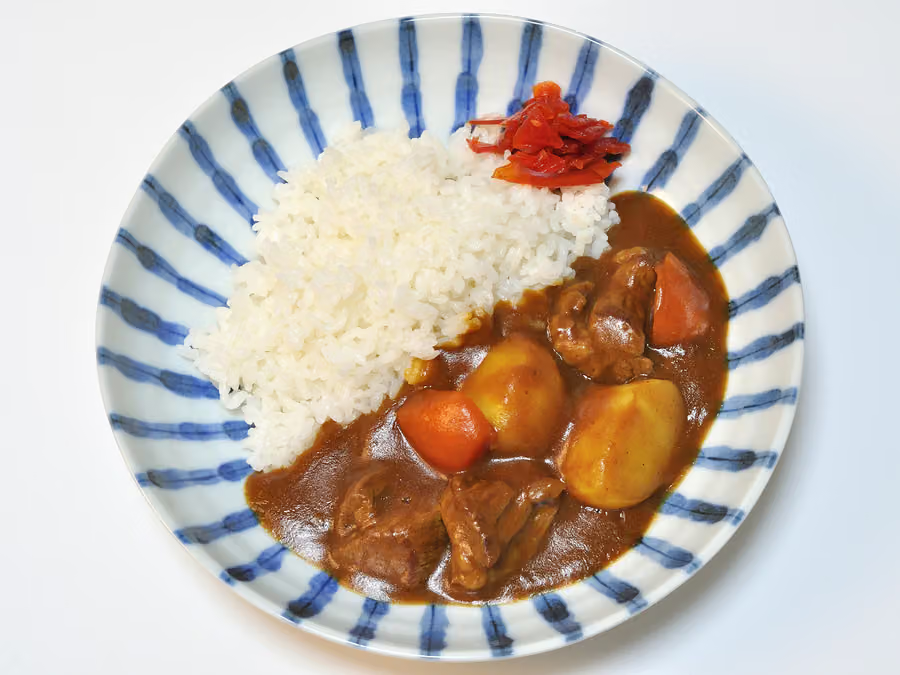
Japanese curry is nothing like Indian or Thai curry — in fact, it came to Japan from Britain, not India. From the thick, glossy sauce and rice on the same plate to katsu curry and curry udon, here's what makes Japanese curry special and where to try it in Tokyo.
The short answer
| Japanese curry | Indian curry | |
|---|---|---|
| Look | A smooth brown sauce thickened with flour | Colors and textures vary from dish to dish |
| Taste | Mild and slightly sweet; you can often choose the spice level | Strongly aromatic, with endless variety |
| How it's eaten | On the same plate as rice, with a spoon | With naan, chapati or rice; eaten by hand in some regions |
| Ingredients | Beef or pork, potatoes, carrots and onions | Lentils, vegetables, chicken, lamb and more, depending on region and religion |
| Its place | A home-cooking and school-lunch staple, called a "national dish" | Less one dish than a whole family of spiced dishes |
💡
Japanese curry grew up as Japanese-style Western food (yoshoku), not Indian food. Enjoy it as its own dish and you'll see why Japan loves it.
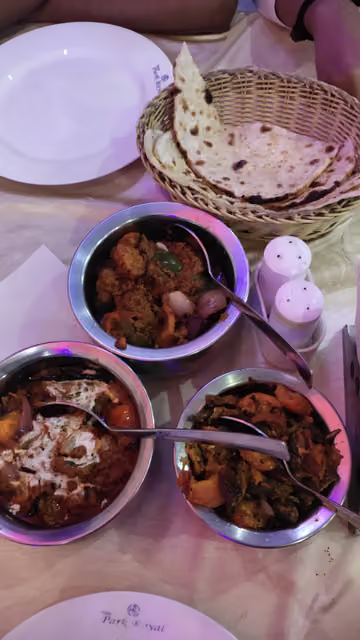 Indian curryMany kinds of curry — lentils, vegetables, chicken — eaten with naan or rice. The spices are the star.
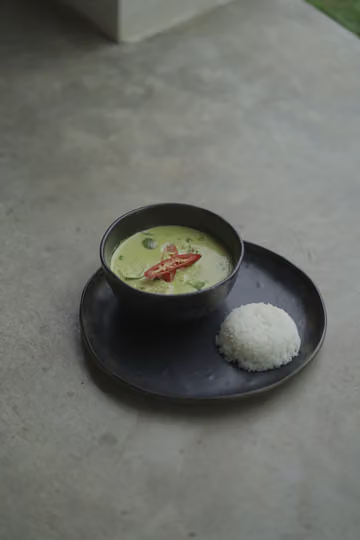 Thai curryA thinner curry made with coconut milk, herbs and green chilies. Green curry is the best known.
 Japanese curryA mild curry thickened with flour, poured over rice.
Japanese curry came "via Britain"
- Indian spice dishes traveled to Britain, where curry powder was invented in the late 18th century.
- In the Meiji era (late 19th century), as Japan embraced Western culture, curry arrived as Western cuisine, made with curry powder imported from Britain.
- Japan's navy modeled a dish on the British navy's curry-flavored stew, thickening it with flour and serving it over rice. A meal with meat and vegetables is said to have helped reduce beriberi, a disease common in the navy at the time.
- Japanese-made curry powder followed, and in the 1950s solid curry roux blocks appeared — just melt them in — turning curry into an easy home dish.
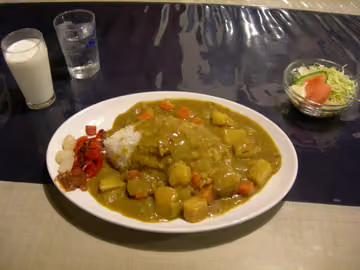 Navy curry"Yokosuka Navy Curry" in Kanagawa is based on Meiji-era navy recipes. Japan's Maritime Self-Defense Force is said to keep the habit of eating curry on Fridays. → Yokosuka City (Japanese)
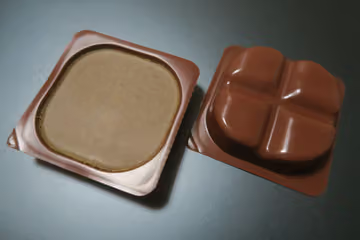 Curry rouxBlocks that look like a chocolate bar, melted into simmered meat and vegetables. This is how almost every Japanese home makes curry.
What makes Japanese curry different: 5 points
- Thickness: the roux is made from flour and fat, so the sauce is thick and clings to the rice.
- Mild and a little sweet: many curries use apple, honey or the sweetness of vegetables, so they're easy for all ages. Spice levels are labeled mild, medium and hot.
- One plate with rice: the curry is poured beside the rice and eaten with a spoon — hence "curry rice."
- Toppings and sides: pork cutlet, fried chicken, cheese and boiled eggs are popular. The classic sides are red fukujinzuke pickles and sweet-sour pickled rakkyo shallots.
- Everyone's comfort food: served at home, in school lunches and in company cafeterias — a true national dish. People often say "curry tastes even better the day after you make it."
Curry riceThe classic home-style curry with beef, potatoes, carrots and onions.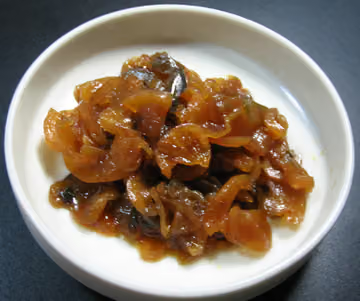 FukujinzukeSweet-salty pickled daikon, eggplant and more — the red pickle served next to curry.
Curry dishes born in Japan
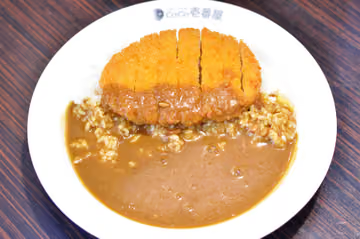 Katsu curryCurry topped with a crispy pork cutlet — known around the world as "katsu curry."
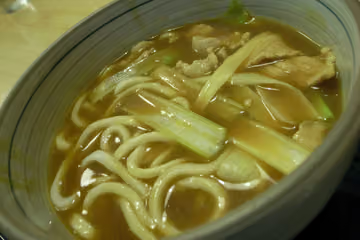 Curry udonCurry thinned with dashi broth over udon noodles. Some shops hand out paper bibs so you don't splash your clothes.
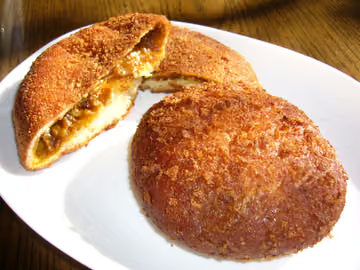 Curry bread (kare pan)Curry wrapped in dough, breaded and deep-fried. The Cattlea bakery in Morishita, Tokyo, is said to be its birthplace.
🍜
Soup curryA thin, soupy curry with big vegetables, born in Sapporo, Hokkaido.💡
See our curry page for more styles.
Where to eat curry in Tokyo
Jimbocho: "curry town"
Jimbocho, famous for its secondhand bookstores, is said to have hundreds of curry restaurants, and hosts the Kanda Curry Grand Prix every year.
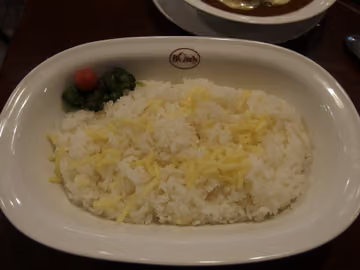 BondyFamous for "European-style curry," rich with butter and fruit. It won the first Kanda Curry Grand Prix.
🍛
KyoeidoFounded in 1924, the oldest curry shop in Jimbocho, known for its flour-free "Sumatra curry."Historic Indian curry
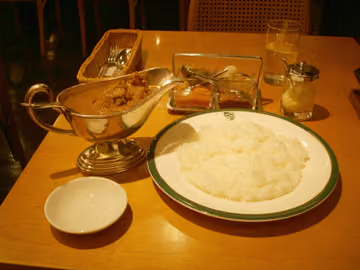 Shinjuku NakamurayaIn 1927 it served Japan's first authentic Indian curry, from a recipe brought by Indian independence activist Rash Behari Bose. → Official site (Japanese)
🐔
Nair's Restaurant (Ginza)Founded in 1949, Japan's oldest Indian restaurant, famous for its "Murgh Lunch" with a whole chicken leg. → Official site (Japanese)Quick and easy
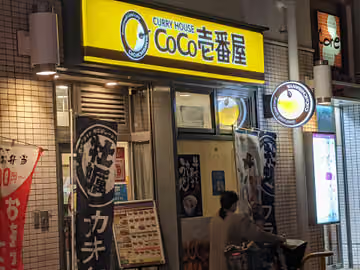 CoCo IchibanyaRecognized by Guinness World Records as the world's largest curry restaurant chain. Choose your spice level, rice portion and toppings — many branches have English menus. → Official site (Japanese)
- You'll also find curry at beef-bowl chains, soba shops and convenience stores, where curry bread is a favorite.
What visitors often ask
- Is it spicy? Japanese curry is basically mild. If you like heat, choose "hot" or a shop where you pick the spice level.
- Is it vegetarian? Curry roux often contains meat extract or animal fat, even in "vegetable curry." Indian restaurants with vegetable curries are a safer bet.
- Halal? Ordinary Japanese curry isn't halal. Look for halal-certified restaurants.
- Souvenirs: "retort curry" pouches that you just heat up come in countless regional versions and are light to carry home.
ℹ️
For more food walks, see our Tokyo street food guide.
Official websites
- Shinjuku Nakamuraya (Japanese)
- Nair's Restaurant (Japanese)
- CoCo Ichibanya (Japanese)
- Kanda Curry Grand Prix (Japanese)
- Yokosuka Navy Curry, Yokosuka City (Japanese)
- History of Japanese curry, House Foods (Japanese)
ℹ️
Hours and menus can change. Check the official websites before you go.
Places in this story
Read next
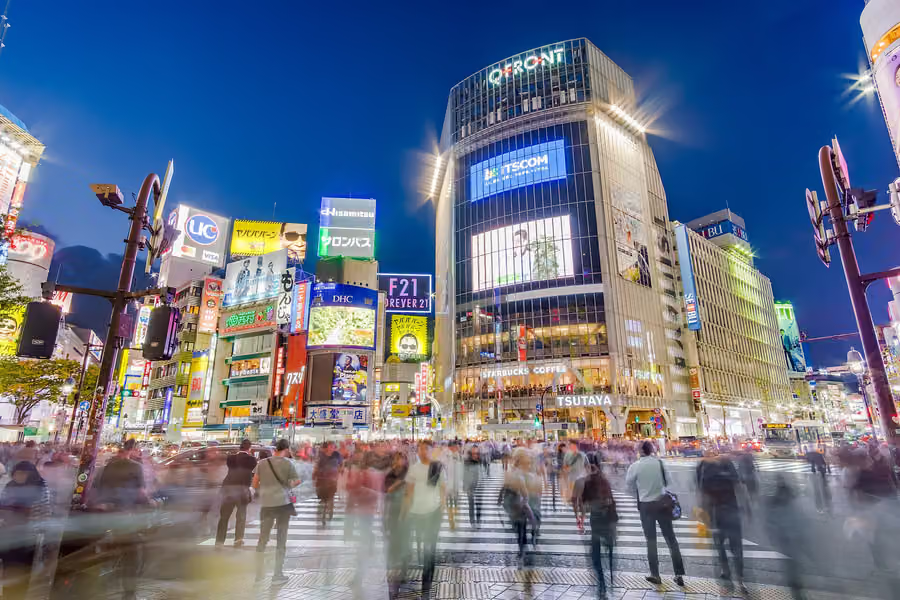 Tokyo 3-Day Itinerary for First-Timers: The Classics, Area by Area, With Less Travel TimeFirst time in Tokyo with three days? This itinerary covers Asakusa, Shibuya, Shinjuku, Ginza and more in an order that keeps travel short, plus rainy-day swaps and the places worth booking ahead.2026-10-15
 Tax-Free Shopping in Japan: The New Refund System from November 2026 and Where to ShopVisitors to Japan can shop without paying consumption tax at tax-free stores. But from November 1, 2026, the system changed: you now pay tax at the store and get it refunded when you leave Japan. Here's how the new process works, what to watch out for, and where tax-free shopping is easiest.2026-10-08
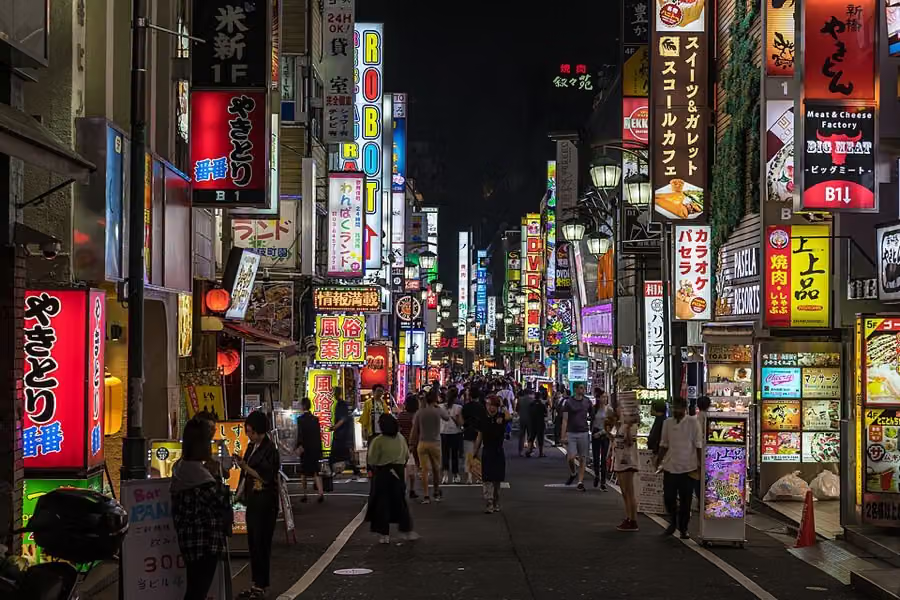 Shibuya, Shinjuku, Asakusa… Tokyo's Top Areas Compared: Where to Go FirstTokyo isn't one city center but a cluster of very different neighborhoods. Here's what each popular area feels like, and which ones pair well in a day.2026-10-06