Vegetarian, Vegan, Halal or Food Allergies in Tokyo: Chains You Can Rely On and How to Ask
Published: 2026-10-15
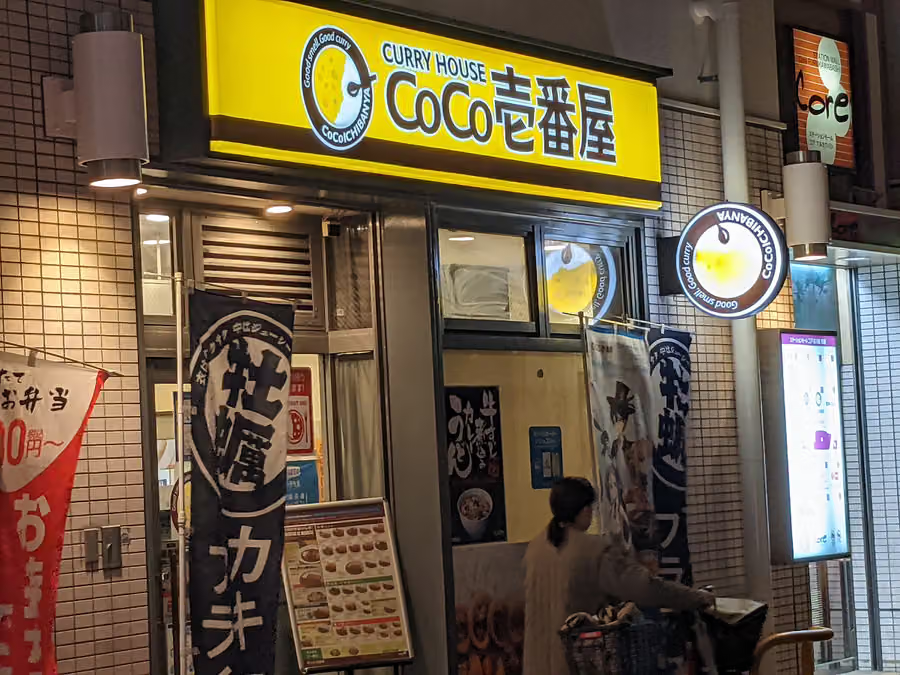
In Japan, even dishes that look vegetable-only often contain fish stock or meat extract. For travelers who are vegetarian or vegan, eat halal, or have food allergies, here are the chains and places that are easier to trust in Tokyo, how to find them, and the Japanese phrases to use.
The short answer
| Diet | Where to look | Watch out for |
|---|---|---|
| Vegetarian / vegan | CoCo Ichibanya's "Veggie Curry," vegan specialty restaurants, Indian restaurants | Fish-based dashi stock, sauces with meat extract |
| Halal | Halal-certified restaurants; search with the Halal Gourmet Japan app | Pork, lard, and seasonings with alcohol such as mirin |
| Food allergies | Big chains that publish allergen information | Restaurant dishes aren't required to be labeled; carry a note in Japanese |
At ordinary Japanese restaurants, "vegetarian" is sometimes taken to mean fish is fine. Be specific: "no meat, no fish, no fish stock." Showing the Japanese phrases below works well.
Hidden ingredients in Japanese food
- Dashi: miso soup, udon, soba and simmered dishes are often made with stock from bonito flakes (fish) and kelp.
- Meat extract and animal fat: often in curry roux, ramen broth and sauces.
- Mirin and cooking sake: alcohol-based seasonings used in teriyaki and simmered dishes. Halal travelers should take care.
- At convenience stores and supermarkets, point a translation app's camera at the ingredient label to check.
For vegetarians and vegans
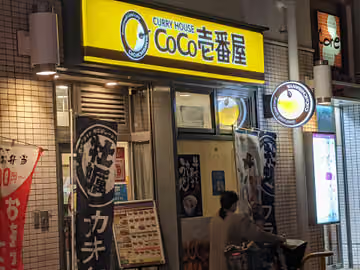 CoCo Ichibanya "Veggie Curry"A curry made with no animal-derived ingredients. Pick vegetable toppings. Not every branch serves it. → Official site (Japanese)
 MOS BurgerSince May 2026 it has served the "Avocado Basil Burger with rice-flour bun," made without animal ingredients in its main components, as a regular menu item (not at all branches). → Announcement (Japanese)
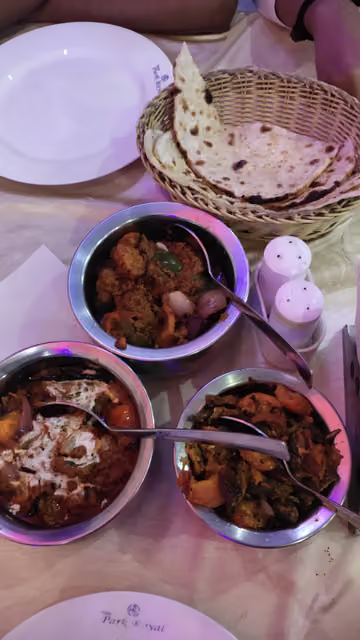 Indian restaurantsPlenty of vegetable and lentil curries, and many clearly mark their vegetarian dishes.
Even at chains, the same cooking equipment or oil may be shared. Strict vegans may prefer specialty restaurants. The HappyCow app is handy for finding vegetarian-friendly places worldwide.
For halal travelers
- Tokyo has halal-certified and Muslim-friendly restaurants, but most major Japanese chains are not halal.
- Shin-Okubo in Shinjuku has many Indonesian, Pakistani and Middle Eastern restaurants, plus halal grocery stores.
- To find places, use the Halal Gourmet Japan app and website, and the Japan National Tourism Organization's (JNTO) guide for Muslim travelers, which also lists prayer spaces.
Even "no pork" dishes may contain lard, pork extract, mirin or cooking sake. Certified restaurants are the safest choice.
For food allergies
- In Japan, packaged foods must list eight allergens: shrimp, crab, walnut, wheat, buckwheat (soba), egg, milk and peanut.
- Dishes made in restaurants aren't legally required to be labeled. Many big chains publish allergen information on their official sites, so check before you go.
- Buckwheat (soba) allergy can be severe. Soba shops may boil udon in the same water as soba.
If you have a serious allergy, carry an allergy note written in Japanese and show it when you order.
Japanese phrases to show
| You want to say | Japanese |
|---|---|
| I can't eat meat or fish | 肉と魚は食べられません。だしもダメです。 |
| I'm vegan | ヴィーガンです。肉、魚、卵、乳製品は食べられません。 |
| No pork or alcohol | 豚肉とお酒(みりん)は食べられません。 |
| I have an allergy | __のアレルギーがあります。入っていますか? |
| Is there a dish without…? | __が入っていない料理はありますか? |
Take a screenshot of this table and show it to the staff.
Frequently asked questions
Is it easy to find vegetarian food in Japan?
In Tokyo, yes. But ordinary Japanese dishes often contain dashi or meat extract, so it's safest to choose vegan or vegetarian specialty restaurants, Indian restaurants, or dedicated menus like CoCo Ichibanya's Veggie Curry.
How do I find halal restaurants?
Use apps and sites like Halal Gourmet Japan and the JNTO guide for Muslim travelers. Choosing a certified restaurant is the most reliable option.
Are allergens labeled on food in Japan?
Packaged foods must label eight allergens: shrimp, crab, walnut, wheat, buckwheat, egg, milk and peanut. Restaurant dishes don't have to be labeled, so ask the staff.
Is miso soup vegetarian?
Usually not — it's typically made with fish-based dashi (bonito flakes). Ask the restaurant.
Official websites
- CoCo Ichibanya Veggie Curry (Japanese)
- MOS Burger
- Halal Gourmet Japan
- JNTO guide for Muslim travelers
- HappyCow
- Food allergy labeling, Consumer Affairs Agency (Japanese)
Menus and store information can change. If you have dietary restrictions, always confirm with the official sites or the restaurant.
Read next
 6 Best Day Trips from Tokyo: Kamakura, Hakone, Nikko, Mt. Fuji and MoreOnce you've got the hang of Tokyo, why not venture a little further? Here are popular getaways you can reach by train and enjoy in a single day.2026-10-07
 What to Do With Big Luggage in Tokyo: Coin Lockers, Luggage Storage and Hands-Free TravelSightseeing while dragging a big suitcase is no fun. Here's how to travel light in Tokyo, from station coin lockers and storage services to sending bags ahead to the airport or where you're staying.2026-10-06
 Where to Stay in Tokyo: Hotel Chains, Luxury Hotels and the Best AreasTokyo has everything from reliable chain hotels to world-class luxury hotels, traditional ryokan and capsule hotels. Here are the types of places to stay and the areas that make getting around easy.2026-10-06